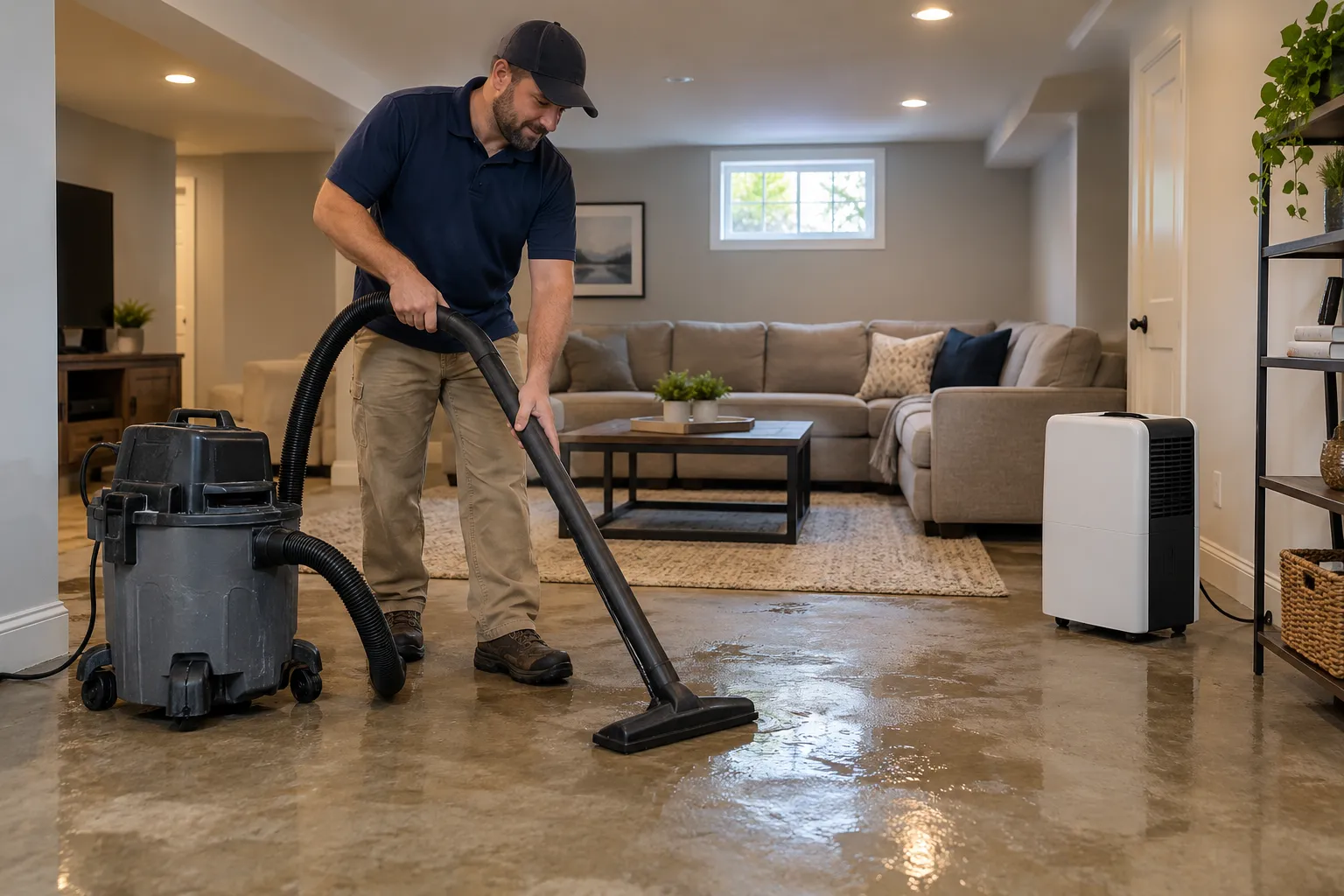
Water in a The Avenues home sets a clock running. Moisture spreads into drywall, subfloors and framing, and each day changes what can be saved. Fbicard Restoration is a referral service. We do not do the work. We help you understand the options, then connect you with an independent provider in our network who handles extraction, drying and cleanup. Request a callback to check provider availability.
Questions to ask before work begins
A provider visit in The Avenues goes better when you arrive with questions. The answers show how the job will run, hour by hour, and what waiting could change.
Request a callback to check provider availability, then put these to the provider:
- What happens first? Usually it is water extraction. Pumps and vacuums pull standing water out of the structure. Drying comes after.
- How will you find hidden moisture? Providers often use moisture meters and thermal cameras to check walls, subfloors and insulation.
- What is the drying plan? Structural drying means air movers and dehumidifiers run for several days. Ask how progress will be checked.
- What will be removed? Wet carpet pad, soaked drywall and swollen trim sometimes cannot be saved. Ask for the list before demolition.
- Is the quote in writing? Ask what it includes and what could change it.
- Will the damage be documented? Photos and moisture readings help if you file a claim.
A clear provider answers these without fuss. If an answer is vague, ask again.
What affects the cost
No honest number exists without seeing the home. In the U.S., typical ranges look like this, and they vary by job:
- Small, contained leak: often about $1,000 to $3,000 for extraction and drying.
- Flooded basement cleanup: commonly $2,500 to $7,500, sometimes more.
- Large or contaminated loss: can pass $10,000 when sewage or long standing water is involved.
Four things move the price most. First, the water category: clean supply-line water costs less to handle than gray or sewage water. Second, the square footage affected. Third, how long the water sat. Fourth, how many materials must be torn out and rebuilt.
Regional homes matter too. Many newer frame houses have finished basements, and finished space means more material to dry or replace. Fast spring melt and heavy snow loads can push water in through foundation walls, which changes the scope.
Get the quote in writing. It should list equipment, days of drying and any demolition. Compare it with another if time allows.
Preventing a repeat after the work
Drying the house is half the job. The other half is finding why water got in.
Ask the provider what caused the loss and what they noticed along the way. Then work through a short list:
- Check that the ground slopes away from the foundation.
- Clear gutters and extend downspouts several feet from the walls.
- Test the sump pump and consider a battery backup.
- Inspect supply hoses on the washer and water heater.
- Look at the roof after hail or heavy snow, and at stucco or wood siding for cracks where water can enter.
- Keep indoor humidity under about 50 percent. Dry air in the region helps, but a closed-up basement can still hold damp.
Do a quick check each spring as the snow melts. Small fixes cost far less than a second loss.
Insurance and documentation
Some policies may cover sudden damage, such as a burst pipe. Gradual leaks and flooding from outside often fall under different rules or separate coverage. Check your policy, and ask your insurer what applies. Fbicard Restoration cannot say what your coverage includes.
What you can do is build a clear record:
- Photograph and film every affected room before anything is moved.
- Keep damaged items until the insurer says otherwise.
- Save receipts for repairs, hotel stays and equipment.
- Ask the provider for moisture logs and a written scope of work.
Providers can often help document damage for a claim. Ask before work starts so the paperwork is not an afterthought.
Next step for The Avenues homeowners
Act while the situation is still small. Request a callback to check provider availability, describe what you see, and learn your options. You are under no obligation to hire anyone.
Our Services in The Avenues
Why The Avenues Chooses Fbicard Restoration
Timing shapes the outcome at home
Moisture moves into framing and flooring as hours pass. Knowing the timeline helps The Avenues homeowners decide what to do first and what can wait.
Independent local providers
Providers in our network are separate businesses. They do the extraction, drying and cleanup, and they set their own terms.
Plain-language options
We explain extraction, drying and demolition in simple terms, so you know the likely next steps before anyone starts work.
No obligation to move forward
Asking questions or requesting an estimate does not commit you to anything. You compare, decide and choose the provider that fits your situation.
Talk to a provider today
Have water damage in Salt Lake City? Request a callback to check provider availability, or send a request and a local provider will follow up. No obligation.
No obligationWe Serve Other Communities Like The Avenues
Nearby Areas We Serve
Sandy Bountiful Cottonwood Heights Taylorsville Midvale Herriman Holladay Sandy
Get in touch
Have water damage in Salt Lake City? Request a callback to check provider availability, or send a request and a local provider will follow up. No obligation.
No obligation